
Introduction.
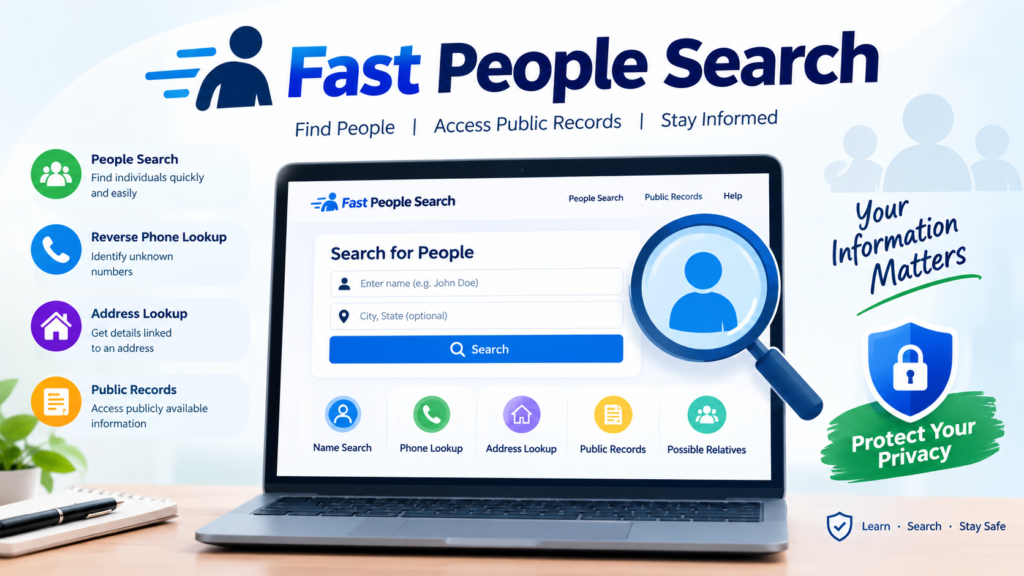
Fast People Search is an online people-search website that helps users look for publicly available information associated with individuals in the United States. People may use people-search websites to reconnect with old acquaintances, identify an unfamiliar phone number, check information associated with an address, or understand what personal details may be available online.
However, finding information through a people-search website requires care. Search results can contain outdated details, information belonging to another person with a similar name, or records that do not accurately reflect someone’s current circumstances. Users should understand how these services work, what their limitations are, and how to protect personal information.fast people search
This guide explains what Fast People Search is, how people-search services operate, what information they may display, whether their results are reliable, and how individuals can request the removal of their own listings. It also covers privacy considerations, alternatives, responsible use, and frequently asked questions. fast people search
Whether you are researching the Fast People Search website for the first time or trying to understand your digital footprint, this article provides a practical overview to help you make informed decisions.fast people search
What Is Fast People Search?
Fast People Search is a people-search website focused on finding information associated with individuals in the United States. It is commonly discussed as a free online lookup resource that organizes information from public records and other available sources.fast people search
Unlike a general search engine, which searches a wide range of webpages, a people-search service organizes information around people, names, addresses, and other identifying details. Depending on the available data, a result may include a person’s name, possible age, current or previous addresses, phone numbers, or names of possible relatives and associates. fast people search
The information displayed is not necessarily complete, current, or verified. A listing should be treated as a collection of possible matches rather than definitive proof of someone’s identity, address, relationships, or background.
Fast People Search is particularly relevant to users who want to understand online people lookup tools and to individuals who want to review or remove personal information that appears in search results.
What Is the Main Purpose of Fast People Search?
The main purpose of a people-search website is to make it easier to locate information associated with a person. Instead of manually searching multiple directories and public sources, a user may be able to find several related details in one place. fast people search
Common reasons for using these services include:
- Looking for a former friend or acquaintance.
- Checking whether an unfamiliar phone number is associated with a public listing.
- Reviewing information linked to a particular name.
- Understanding what personal information may be publicly accessible.
- Learning how personal details appear across online directories.
The usefulness of any result depends on the quality of its underlying information and whether the result actually belongs to the person being searched for.
How Does Fast People Search Work?
Fast People Search operates within the broader category of people-search and information-aggregation services. Such websites collect, organize, or reference information from sources that may include public records, directories, other databases, and online information providers. fast people search
The precise source and availability of individual details can vary. Users should consult the website’s current privacy notice for information about its data practices rather than assuming that every listing comes directly from a government database.
1. Information Collection.
Information associated with individuals may already exist in public records, telephone directories, property-related records, or other online sources. Data providers and people-search services can make connections between these records. fast people search
The existence of a public record does not automatically mean every detail is accurate or suitable for every purpose.
2. Data Organization.
Information systems organize records using details such as names, locations, addresses, and phone numbers. This helps users find possible matches without examining each source individually.
However, two people may share the same name, live in the same city, or have similar contact details. A database may therefore group unrelated records together.
3. Search and Matching
A user enters a search term, such as a person’s name or another available identifier. The website returns records that appear to match the information supplied.
A broader search may produce several possible matches. Adding a relevant location can sometimes help narrow the results, but it does not guarantee that the correct person has been identified.
4. Displaying Results.
The website presents the information associated with its matching records. Depending on the listing and available data, this may include names, addresses, telephone numbers, or possible family connections.
Users should verify important details independently before relying on them.
Key Features of Fast People Search.
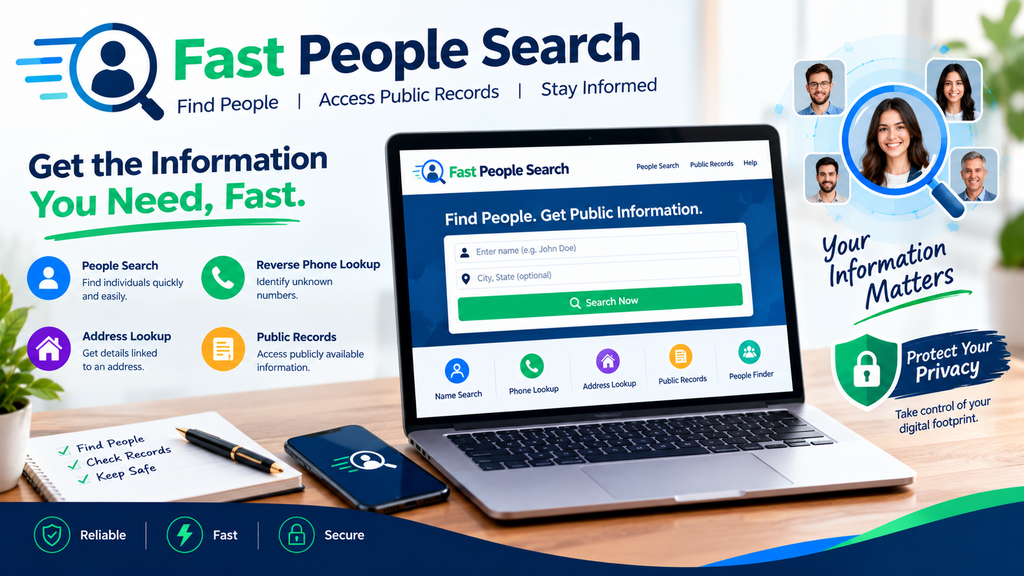
People-search services may provide several types of lookup functionality. The precise options and results available on Fast People Search can change, so users should confirm current features directly on the website.
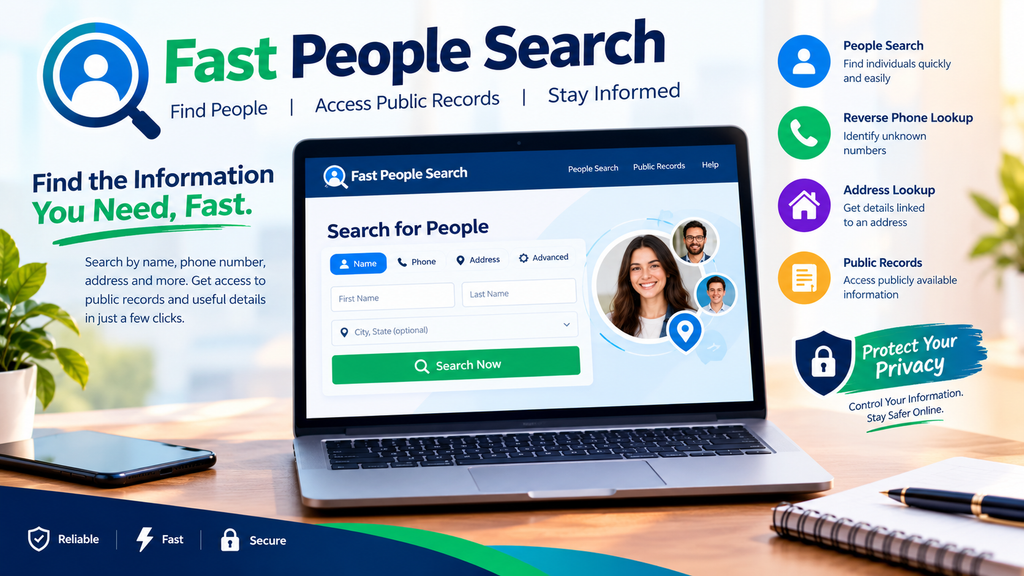
People Search by Name.
Name-based lookup is one of the most familiar ways to search for a person online. A user enters a first name, last name, or other identifying details to locate possible matches.
Adding a city or state can help distinguish between people with similar names. Nevertheless, a name match alone is not enough to establish identity.
Reverse Phone Number Lookup.
Reverse phone lookup allows users to investigate information associated with a telephone number. Depending on the database, a result may show a possible name or other details linked to the number.
Phone number information can become outdated when a number changes ownership, is reassigned, or appears incorrectly in a third-party database. A lookup result should therefore not be treated as conclusive identification.
Address Lookup.
Address-based searches may help users locate records associated with a residential address. Some people-search services connect addresses with names, previous locations, or possible household members.
An address association does not prove that someone currently lives at that location. People move, properties change ownership, and public databases may retain older information.
Public Records Search.
Public records are documents or information made accessible under applicable laws and policies. Depending on the jurisdiction and record type, examples can include property information and certain official filings.
Not every record is public, and not every people-search result is an official record. Users should consult the relevant government agency when they need an authoritative document.
Possible Relatives and Associates.
Some people-search listings display individuals who may be related to or associated with the person being searched for.
These connections may be generated from shared addresses, historical records, or other data relationships. They should not be interpreted as verified family relationships without independent confirmation.
How to Use Fast People Search.
If you want to understand how the service works, follow a careful and straightforward process.
Step 1: Open the Website.
Visit the Fast People Search website and review its available search options and privacy information. Make sure you are using the intended website rather than an unrelated page with a similar name.
Step 2: Enter the Information You Already Know.
Begin with the person’s name or another identifier supported by the website. Avoid adding unnecessary personal information about yourself or someone else.
If the person has a common name, a general location may help narrow the possible matches.
Step 3: Review the Search Results.
Examine the available listings carefully. Look for relevant differences between possible matches rather than assuming the first result is correct.
Details such as a location or an associated age may help you assess whether a result is plausible, but none of these details alone proves identity.
Step 4: Consider the Reliability of the Information.
Check whether the information appears current and whether other trustworthy sources support it. If a detail matters for a legal, financial, safety, or employment decision, use an appropriate official source instead.
Step 5: Respect Privacy.
Use information responsibly. Avoid publishing another person’s private details, contacting them repeatedly without consent, or using a listing to intimidate, harass, or threaten someone.
A search result is not permission to misuse personal information.
Is Fast People Search Free to Use?
Fast People Search is generally described as a free people-search website. However, users should distinguish between accessing a public listing and obtaining a separate paid service or report offered through another provider.
The cost and availability of individual features can change. Before entering payment information, check the current website, identify the company providing the service, and review any applicable terms.
A free search result also does not mean that every displayed detail has been verified. The value of the result depends on its accuracy, relevance, and usefulness for the user’s specific purpose.
What Should Users Check Before Paying for a Report?
Before purchasing a report from any people-search service, consider these questions:
- Is the information available from an official public-record source?
- Does the report explain what data it contains?
- Are any recurring charges or subscription conditions clearly disclosed?
- Is the information current enough for your purpose?
- Does the provider explain its cancellation and refund policies?
- Could the information be obtained from a more authoritative source?
Never assume that a paid report is automatically accurate or that a more detailed report is equivalent to a verified background check.
What Information Can Fast People Search Show?
The information associated with a listing depends on the available data, the individual record, and the website’s current practices. A result may contain some of the following categories.
Names and Possible Aliases.
A listing may contain a person’s name or variations associated with different records. Spelling differences, name changes, and similar names can complicate identification.
Users should avoid assuming that two records belong to the same person simply because the names look alike.
Current and Previous Addresses.
Some listings may show addresses associated with a person in available records. These may include older residential locations.
An address shown online might no longer be current. It should not be used to make assumptions about someone’s present residence or movements.
Phone Numbers and Contact Details.
Depending on the record, a people-search website may display telephone numbers or other contact details associated with a name.
These details can be inaccurate, reassigned, or connected to another person. Users should not rely on a single lookup result to establish who owns a telephone number.
Possible Relatives and Associates.
Some databases display names that may be connected to the person in question. Such connections can be based on shared addresses, records, or other associations.
The information may be incomplete or misleading. A database relationship should not be treated as proof of a personal or family relationship.
Other Publicly Available Information.
Certain records may contain additional details, depending on the source and applicable rules. The information available varies, and users should not assume that every listing contains the same categories of data.
A people-search profile is not necessarily a complete account of someone’s life, and the absence of a detail does not prove that the detail does not exist elsewhere.
Is Fast People Search Legitimate?
Fast People Search is a people-search website, but the word “legitimate” can refer to several different questions: whether a website operates as represented, whether its information is accurate, whether its data practices comply with applicable laws, and whether a particular result can be trusted.
These questions should be considered separately.
A website may provide a functioning search service while still displaying outdated or incorrectly matched records. Similarly, the presence of a listing does not establish that the information is suitable for a particular decision.
To evaluate Fast People Search, review its current privacy notice, terms of use, contact information, and removal procedures. If you need official information, consult the original government agency or other authoritative record holder.
Do not use a people-search listing as the sole basis for accusing someone of wrongdoing or making a consequential decision.
How Accurate Is Fast People Search?
The accuracy of people-search results varies. Information may be correct when first collected but become outdated later. In other cases, an error may occur because records belonging to different people have been combined.
Several factors can affect accuracy.
Outdated Information.
A person may move, change a phone number, or change their name. A database that has not been updated may continue to display previous information.
Similar Names.
People with common names can be difficult to distinguish. Even when a listing includes a location or age, a match can still be incorrect.
Incomplete Records.
A database may contain only part of a person’s available information. Missing details can make a profile difficult to interpret.
Data Matching Errors.
Information systems connect records using identifiers and patterns. If those connections are wrong, details associated with one individual may appear in another person’s listing.
How to Verify a Result.
When accuracy matters, compare the result with a reliable, relevant source. For official matters, contact the agency or institution responsible for the record.
Avoid treating a people-search profile as proof of identity, criminal history, ownership, family relationships, or current residence.
Fast People Search Privacy Risks and Safety Concerns.
People-search websites raise privacy questions because they can make information about individuals easier to discover. Even information that was originally accessible in separate public sources may feel more exposed when combined into a single profile.
Potential concerns include unwanted contact, exposure of an old address, confusion between people with similar names, and the circulation of outdated details.
Unwanted Calls and Messages.
If a telephone number is associated with a public listing, someone may use it to initiate unwanted contact. However, a listing does not prove that the number currently belongs to the person named.
Be cautious about unexpected calls or messages, especially when someone claims to know personal information about you.
Exposure of Residential Information.
An address appearing in a public listing can create concerns for people who wish to keep their location private. Individuals facing stalking, harassment, or other safety risks may have particular reasons to review their online exposure.
Avoid sharing another person’s address publicly or using it to confront them.
Identity Confusion.
Incorrect records can create false associations between people. This can lead to embarrassment, mistaken assumptions, or other consequences when a listing is treated as verified information.
If you discover inaccurate information about yourself, document the listing and consider submitting a correction or removal request.
Scams and Social Engineering.
Personal details can sometimes be used to make fraudulent messages sound convincing. A scammer might mention an old address, a relative’s name, or another publicly available detail to gain trust.
Never share passwords, authentication codes, financial account details, or sensitive identity documents merely because someone appears to know information about you.
Practical Privacy Protection.
To reduce unnecessary exposure:
- Limit the personal information you publish on public profiles.
- Review privacy settings on social media accounts.
- Use strong, unique passwords and multifactor authentication where available.
- Be cautious when responding to unexpected requests for money or personal information.
- Review people-search listings periodically if online privacy is a concern.
- Submit opt-out requests to relevant data brokers when appropriate.
Removing a listing from one service does not necessarily remove the same information from every other website.
How to Remove Your Information From Fast People Search.
Individuals who do not want their personal details displayed may be able to submit an opt-out or removal request through the website’s official process.
The service’s instructions can change, so use the current official page rather than relying solely on an older guide.
Official removal page: https://www.fastpeoplesearch.com/removal
Step 1: Open the Official Removal Page.
Visit the removal page and read the current instructions. Confirm that you are on the genuine Fast People Search domain.
Step 2: Identify Your Listing.
Follow the website’s instructions to locate the record you want removed. You may need to provide identifying information to distinguish your listing from those of people with similar names.
Use only the information needed for the request. Do not submit sensitive documents unless the official process genuinely requires them and you have verified why they are needed.
Step 3: Submit the Opt-Out Request.
Complete the required fields and any verification steps shown on the official page. Depending on the current process, you may need access to an email account to confirm the request.
Read the declarations carefully and make sure the information you provide is accurate.
Step 4: Confirm Your Request.
If the website sends a verification email, follow its instructions promptly. Check your spam or junk folder if the message does not appear in your inbox.
Keep a record of the request and any confirmation provided.
Step 5: Allow Time for Processing.
The website may specify a processing period. Follow the current instructions and check the original listing again after that period has passed.
Do not assume that a submitted request means removal has already been completed.
Step 6: Review Duplicate Listings.
A person may have more than one listing, perhaps because of a previous address, a name variation, or a separate record. Check whether other relevant profiles remain and follow the applicable instructions for each one.
Step 7: Continue Monitoring Your Digital Footprint.
Information may remain available through other data brokers, public records, search-engine caches, or independent websites. A removal request to one service does not automatically guarantee removal from every source.
For a broader privacy review, identify the sites that display your information and consult each site’s own removal procedure.
Does Removing a Fast People Search Listing Remove It From Google?
Not necessarily. Removing a listing from the original website and removing a result from a search engine are separate processes.
A search engine may temporarily continue showing a previously indexed page after the original content has changed or disappeared. The search result may update when the page is recrawled, but timing can vary.
If the original page has been removed or substantially changed, you can review the search engine’s official tools for requesting an update to outdated results. If personal information is exposed in a way covered by the search engine’s policies, additional removal options may be available.
However, search-engine removal does not necessarily delete the information from the original website or other databases. For the best result, address the original source and the search-engine listing separately when appropriate.
Fast People Search Alternatives.
People-search alternatives may be useful when a service does not return a relevant result or when a user needs a different type of information. Each platform has different data sources, access rules, costs, and privacy practices.
TruePeopleSearch.
TruePeopleSearch is another name-based people-search website. As with any people-search service, its results should be treated as possible matches rather than authoritative proof.
Users should review its current privacy and removal policies before submitting personal details or relying on a listing.
Whitepages.
Whitepages is a directory and people-information service. Depending on the available product and record, it may provide directory-style contact information or other lookup features.
Check the current terms and pricing because availability can differ between features and services.
Government Public Records Websites.
Government agencies can be more appropriate when a user needs an official record. For example, a county property office may be the relevant source for property records, while a state agency may handle particular public filings.
The correct source depends on the type of information, the jurisdiction, and applicable access rules. Some records are restricted or available only through formal procedures.
General Search Engines.
General search engines can help users find public webpages, professional profiles, news reports, or official directories. Results may provide context that is not present in a people-search listing.
A search engine is not itself proof that the information it indexes is accurate. Always evaluate the original source.
Which Alternative Should You Choose?
The best option depends on your purpose.
- For an official property record, begin with the relevant government office.
- For an old acquaintance, use appropriate public or professional channels and respect their privacy.
- For a business contact, consult the organization’s official website.
- For personal privacy, use the data-removal process provided by the website displaying your information.
- For a phone number associated with suspicious activity, avoid returning sensitive information to an unknown caller and use trusted verification methods.
No single people-search website should be considered a complete or universally accurate source of personal information.
Fast People Search vs. Other People Search Websites.
People-search websites may appear similar, but they can differ in their search options, data sources, record coverage, pricing, and removal procedures.
| Comparison factor | Fast People Search | Other services |
|---|---|---|
| Main purpose | Find information associated with people | Varies by platform |
| Name lookup | A core people-search use case | Common on many platforms |
| Phone lookup | Availability depends on current features | Varies by provider |
| Address information | May appear in matching listings | Varies by database |
| Cost | Commonly described as free for basic lookup | May be free, paid, or mixed |
| Data accuracy | Must be checked independently | Must be checked independently |
| Privacy removal | Use its own current opt-out process | Each service has its own rules |
| Official record status | A listing is not itself an official record | Depends on the original source |
The table provides a general comparison, not a guarantee that every feature is currently available. Check the provider’s website for up-to-date details before using a particular service.
Can You Use Fast People Search for Background Checks?
A people-search website should not automatically be treated as a formal background-check provider.
In the United States, certain employment, housing, credit, and other eligibility decisions may be subject to specific legal requirements. Services used for those decisions may need to comply with applicable laws, including the Fair Credit Reporting Act where relevant.
A casual people-search listing may not meet the accuracy, completeness, consent, disclosure, or procedural requirements associated with a legally regulated background check.
If you are an employer, landlord, or other decision-maker, use an appropriate compliant service and obtain qualified legal guidance when necessary. Do not make consequential decisions solely from an unverified online profile.
For personal research, distinguish between a possible public-record match and an official record that has been verified with its issuing agency.
Is Fast People Search Safe for Personal Use?
Safety depends partly on how the service is used and what the user does with the information obtained.
Visiting a website to understand its features is different from relying on an unverified listing to make a serious decision or sharing another person’s personal details publicly.
Before using any people-search service, consider the following precautions:
- Review the website’s privacy notice and terms.
- Do not assume that every result belongs to the intended person.
- Avoid entering unnecessary sensitive information.
- Verify important details through reliable sources.
- Do not use personal data to harass, threaten, stalk, or impersonate anyone.
- Be cautious about any service that requests unexpected payment or unnecessary sensitive documents.
- Use official removal procedures if you want to request the removal of your own listing.
For people who have specific safety concerns, it may be appropriate to seek advice from a qualified privacy professional or a relevant support organization.
How to Protect Your Personal Information Online.
Protecting personal information requires more than removing a single online profile. Details may be spread across social networks, old directories, data brokers, public records, and other websites.
Review Your Public Profiles.
Check what information you have shared on social media and public-facing accounts. Remove unnecessary details such as a personal phone number or home address where possible.
Review the visibility settings for older posts and profiles that you no longer use.
Use Strong Account Security.
Use unique passwords and multifactor authentication for important accounts. This helps reduce the risk of unauthorized access even if personal information is publicly available elsewhere.
Limit Information Shared With Unknown Services.
Before providing personal details to a website, determine why the information is needed and how it may be used. Avoid sharing sensitive data without a clear, legitimate reason.
Monitor Your Online Presence.
Search for your name periodically and review the sources displaying your information. If you find an inaccurate or unwanted listing, record the page details and follow the website’s current correction or opt-out process.
Remove Information at the Source.
When possible, request removal from the website that originally publishes the information. If a search engine still displays an outdated result, review the search engine’s separate removal or refresh options.
Understand the Limits of Removal.
Some information may remain in official records or be republished by other services. Privacy laws and removal rights differ by location and type of data.
A realistic privacy plan focuses on reducing unnecessary exposure, securing accounts, and addressing the sources that matter most rather than assuming every online reference can be erased permanently.
Fast People Search for Users Outside the United States.
Fast People Search is primarily associated with people-search information in the United States. Users in other countries may find its results less relevant if the person they are researching has little connection to U.S. records.
Data availability and legal access rules vary between countries. A person’s details may be subject to different privacy protections depending on where they live and where the information is processed.
For international searches, consider the relevant country’s official public-record sources, professional directories, or other appropriate resources. Do not assume that a U.S.-focused people-search service can provide complete information about someone living elsewhere.
Users outside the United States should also review the privacy rights and data-protection rules that apply in their own jurisdiction when requesting removal of personal information.
Common Mistakes to Avoid When Using Fast People Search.
Even when a website is easy to use, careless interpretation of results can create problems.
Assuming the First Result Is Correct.
The first listing may not belong to the intended person. Compare available details and seek independent confirmation before drawing conclusions.
Treating Old Addresses as Current.
An address in a database may be historical. Do not assume that the person still lives there or use it as a basis for unwanted contact.
Confusing Possible Relatives With Confirmed Family Members.
Associated names may reflect shared records or other data relationships. Do not treat them as verified relationships without additional evidence.
Relying on a Single Source.
Information that matters should be checked against authoritative sources. A single people-search result is not sufficient evidence for a legal, financial, or safety decision.
Assuming One Removal Request Covers the Entire Internet.
Removing a profile from one service may not affect other websites, public records, or search-engine caches. Review each relevant source separately.
Sharing Search Results Without Considering Privacy.
Even publicly accessible details can be harmful when republished without context. Avoid exposing another person’s information unnecessarily or using it to pressure them.
Frequently Asked Questions About Fast People Search.
What Is Fast People Search Used For?
Fast People Search is used to look for information associated with individuals in the United States. Depending on the available records, a listing may include a name, possible address, phone number, or associated individuals. Results should be verified before being relied upon.
Is Fast People Search Free?
The service is commonly described as offering free basic people searches. However, features, third-party services, and pricing conditions can change. Check the current website before assuming that every service or report is free.
Can You Search for Someone by Phone Number?
Some people-search services offer reverse phone lookup. The availability of a particular feature should be confirmed on the current website, and any matching result should be treated as unverified until independently confirmed.
How Do I Remove My Name From Fast People Search?
Visit the official removal page at https://www.fastpeoplesearch.com/removal and follow the current opt-out instructions. You may need to locate your listing, submit a request, and confirm it through email. Check the website for its current processing timeline.
Is Fast People Search Legitimate?
Fast People Search is a people-search website, but that does not mean every listing is accurate or suitable for every purpose. Review its current privacy information and verify important records through authoritative sources.
How Accurate Is Fast People Search?
Accuracy varies by record. Information may be outdated, incomplete, or incorrectly associated with someone who has a similar name. Always verify important details independently.
Can Fast People Search Show Someone’s Address?
A listing may contain current or previous addresses associated with a record. However, the presence of an address does not prove that the person currently lives there.
Does Fast People Search Provide Official Background Checks?
A people-search listing should not be assumed to be an official or legally compliant background check. For employment, housing, or other regulated decisions, use an appropriate service and follow applicable law.
Does Removing a Listing Delete It From Google?
Not necessarily. Removing the original listing and updating a search-engine result are separate processes. You may need to request an update or removal from the relevant search engine after the original page changes.
Is Fast People Search Available Outside the United States?
People-search coverage is primarily associated with U.S. information. Results for individuals in other countries may be limited, and privacy and access rules vary by jurisdiction.
Can Information Reappear After Removal?
It is possible for information to appear again if it is collected from another source or a new record is created. Check the website’s current policies and periodically review your online presence if continued exposure is a concern.
Are Fast People Search Alternatives Available?
Yes. Alternatives include other people-search websites, general search engines, professional directories, and government record sources. The most appropriate choice depends on the information needed and whether an official record is required.
Final Thoughts.
Fast People Search is an online people-search resource that can help users find information associated with individuals in the United States. Its usefulness depends on the available records, the relevance of the search, and the accuracy of the information displayed.
The most important point is that a people-search listing should not be treated as definitive proof of identity, current residence, family relationships, or background. Publicly accessible information can still be outdated, incomplete, or incorrectly matched.
If you are researching someone, use the service responsibly and verify important details through reliable sources. If you are concerned about your own privacy, review the official opt-out process, check for duplicate listings, and remember that removal from one website may not remove information from every other source.
A balanced approach combines careful information verification with practical privacy protection. Understanding both the benefits and limitations of Fast People Search helps users make better decisions while respecting the privacy and safety of others.