
Introduction.
The internet is full of websites that publish lists, recommendations, reviews, and opinions about popular topics. However, finding out what people genuinely think about movies, television shows, celebrities, music, sports, food, and other subjects can sometimes be difficult. Many websites rely on the opinions of individual writers or professional critics. Ranker takes a different approach by allowing people to participate in the ranking process.
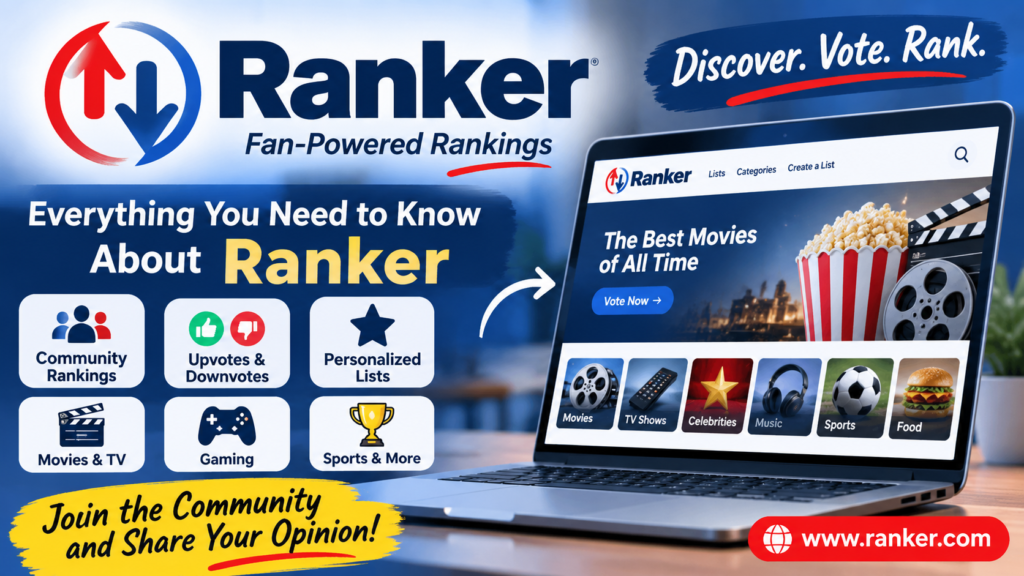
Ranker is an online platform that focuses on community-driven rankings and interactive lists. It gives visitors an opportunity to vote for their favorite items, express their opinions, and influence how different lists are organized. Instead of relying entirely on one person’s judgment, the platform combines contributions from a large community of users.
From entertainment recommendations to pop culture discussions, Ranker covers a wide variety of subjects. Visitors can explore existing lists, compare different opinions, and participate in voting activities. Some lists also allow users to create their own personalized rankings, giving them greater control over the order of items.
The platform is particularly interesting for people who enjoy discovering popular opinions and comparing their preferences with those of other internet users. Whether someone wants to explore the best movies, discover popular television programs, or see how audiences rank famous personalities, Ranker provides an interactive environment for exploring these topics.
This comprehensive guide explains what Ranker is, how its ranking system works, its main features, available categories, advantages, limitations, and how users can get started.
What Is Ranker?
Ranker is a community-driven online ranking platform where visitors can explore lists and participate in voting on different subjects. Its primary purpose is to collect opinions from users and use those opinions to influence the position of items within rankings.
The platform covers subjects such as movies, television, music, celebrities, video games, sports, food, brands, and popular culture. These subjects are presented through organized lists that make information easier to explore and compare.
Unlike a traditional article that presents one author’s personal ranking, Ranker allows its audience to contribute to the discussion. Users can vote items up or down, depending on their preferences. This approach creates rankings that reflect the combined opinions of participating visitors.
For example, a list about the best comedy movies may include several popular films. Visitors can support the movies they enjoy and vote against options they do not consider particularly good. As more people participate, the ranking can change.
Ranker also provides personalized ranking features on eligible lists. These features allow users to organize items according to their own preferences rather than simply accepting the existing community order.
The platform combines editorially curated lists, user participation, voting data, and ranking technology. Its approach is based on the idea that a large collection of individual opinions can provide a useful picture of public preferences.
In simple terms, Ranker is a website where people can discover rankings, share their opinions, and help determine which items deserve higher positions.
How Does Ranker Work?
Ranker works through a combination of editorial list creation, community voting, personalized rankings, and data analysis.
The process begins when a list is created around a particular topic. The list may focus on entertainment, lifestyle, sports, food, or another subject. Topic experts and editors initially organize the content to provide a useful starting point.
After publication, visitors can participate by voting on the available items. Their contributions help shape the overall ranking.
The platform considers multiple factors rather than simply counting the number of votes received by each item. This allows Ranker to account for different voting patterns and individual ranking preferences.
1. Editorially Curated Lists.
Many Ranker lists begin with editorial preparation. The editorial team identifies a topic, researches relevant items, and creates a list that users can explore.
For example, an editor may prepare a list about the greatest television series of all time. The list can include well-known shows from different periods and genres.
Editorial preparation gives users a starting collection of options. It also helps organize information around a clear subject.
2. Community-Based Voting.
Community voting is one of the most important parts of Ranker.
Visitors can vote items up or down depending on their preferences. An upvote expresses support, while a downvote indicates that the visitor does not favor the item as much.
These votes contribute to the ranking process and help show which options receive stronger community support.
For example, if thousands of visitors participate in a ranking about popular action movies, their votes can influence which films appear near the top.
3. Personalized Rankings.
Some Ranker lists offer a re-ranking feature. This allows users to create their own preferred order of items.
A personalized ranking is different from a standard vote because it allows someone to organize multiple options according to individual preferences.
For instance, one visitor might consider an older action movie the greatest film in the genre, while another may prefer a more recent release.
Both users can have different personal rankings without changing each other’s individual lists.
4. Ranking Algorithm.
Ranker uses a proprietary ranking algorithm to determine how items appear within community lists.
According to the platform’s explanation, four important factors influence an item’s position:
- Total number of upvotes.
- Ratio of upvotes to downvotes.
- Frequency with which an item appears in user rankings.
- Specific placement of the item within those rankings.
Personalized re-rankings receive greater weight than ordinary votes because they involve users taking additional steps to create their own versions of a list.
The exact mathematical formula is proprietary, so visitors cannot calculate every ranking position using a publicly available equation.
This approach allows the platform to consider more than one type of user interaction when organizing its lists.
Main Features of Ranker.
Ranker offers several features that make it different from ordinary list-based websites. Its main strength is the combination of accessible content and audience participation.
1. Interactive Ranking Lists.
Interactive lists are central to the Ranker experience.
Instead of simply reading a fixed article, visitors can participate in the ranking process. They can review different items, compare options, and express their preferences through voting.
This makes the platform more engaging for users who enjoy sharing opinions about entertainment and other popular subjects
2. Upvote and Downvote System.
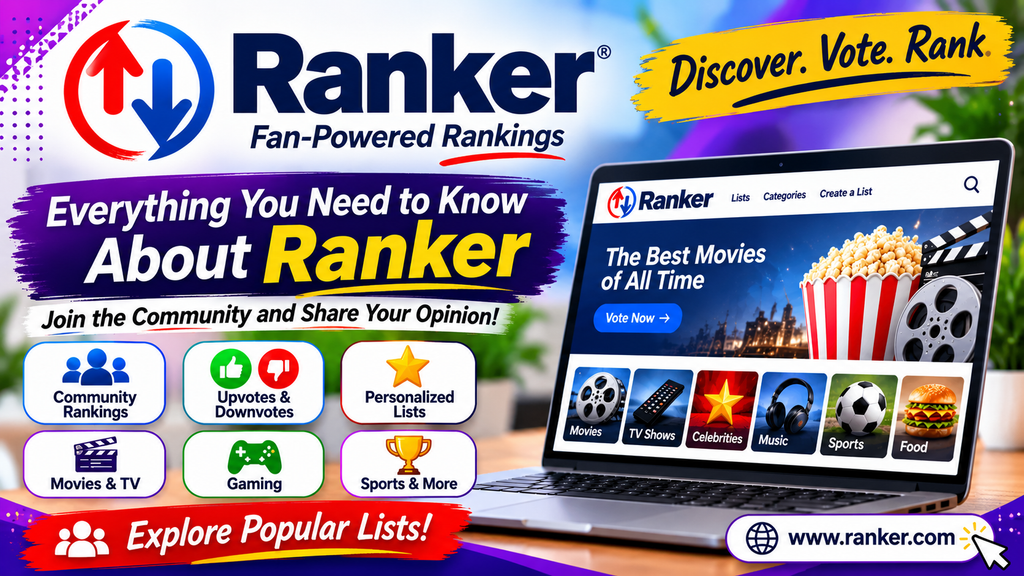
The upvote and downvote system gives users a straightforward way to communicate their preferences.
An upvote supports an item, while a downvote expresses a negative preference.
These interactions contribute to the overall voting data used by the platform.
The system also makes it possible for users with different opinions to participate in the same ranking without needing to write lengthy reviews.
3. Personalized Ranking Options.
Another useful feature is the ability to create personal versions of eligible lists.
A user can organize available items according to personal taste and decide which options deserve the highest positions.
This is particularly helpful for subjective topics such as movies, music, television programs, and celebrities.
4. Wide Range of Categories.
Ranker covers many different subjects. Users are not limited to entertainment or one particular industry.
They can discover lists about sports, food, gaming, brands, historical subjects, and other areas of interest.
This variety makes the website useful for people with different hobbies and preferences.
5. Community Participation.
Ranker encourages visitors to become active participants rather than passive readers.
People can influence lists through voting and, where available, personalized re-ranking.
Community participation also creates opportunities to discover opinions that may differ from personal expectations.
6. Organized Content Discovery.
The platform presents information through topic-based lists. This structure helps visitors find related content without searching through large amounts of unorganized information.
For example, someone interested in television can explore different lists about comedy shows, dramas, streaming programs, and memorable television characters.
7. User Accounts and Saved Preferences.
Creating an account can provide additional ways to interact with the platform.
According to Ranker’s terms of service, users can create accounts to save ratings, favorites, and lists.
This can be useful for people who regularly visit the website and want to keep track of their preferences.
What Can You Find on Ranker?
One reason Ranker attracts different types of visitors is its variety of ranking categories. The platform provides lists covering entertainment, lifestyle, sports, and many other subjects.
Movies and Films.
Movie rankings are among the most recognizable types of content on Ranker.
Visitors can explore lists about the best action movies, comedy films, horror classics, romantic movies, and science fiction releases.
These rankings can help movie fans discover films they may not have watched before.
They can also compare their personal favorites with the opinions of other viewers.
Television Shows.
Ranker also covers television programs from different genres and periods.
Visitors can discover lists about the greatest sitcoms, drama series, animated shows, reality television programs, and streaming content.
These lists can be helpful when someone wants recommendations for their next television series.
Celebrities and Famous Personalities.
Celebrity-related rankings provide another popular category.
These lists can feature actors, actresses, musicians, television personalities, athletes, and other well-known individuals.
Users can explore rankings based on popularity, entertainment contributions, public recognition, and other subjective topics.
It is important to understand that these rankings generally represent audience preferences rather than official professional evaluations.
Music and Musicians.
Music lovers can explore lists covering different musical genres, artists, bands, albums, and songs.
Some rankings focus on legendary musicians, while others discuss modern performers and popular music trends.
These lists provide an opportunity to compare different musical preferences and discover artists from different generations.
Sports and Athletes.
Sports rankings allow visitors to explore discussions about teams, athletes, performances, and memorable sporting moments.
Different users may have different opinions about the greatest players or most successful teams.
Community-based rankings provide a way to compare those opinions.
However, subjective fan rankings should not be confused with official sports statistics or competition results.
Food and Restaurants.
Ranker also covers food-related subjects.
Visitors may find lists about popular fast-food restaurants, favorite snacks, different dishes, and other food-related topics.
These rankings can help people discover new options and compare consumer preferences.
Video Games.
Gaming-related rankings can cover video games, characters, franchises, gaming experiences, and other topics.
People who enjoy gaming can explore different opinions and discover titles that may interest them.
Brands and Products.
Some lists focus on companies, brands, and consumer products.
These rankings can help readers understand which brands receive attention and positive opinions from participating users.
However, a community ranking should not replace professional product testing, technical specifications, or independent consumer research.
How to Use Ranker.
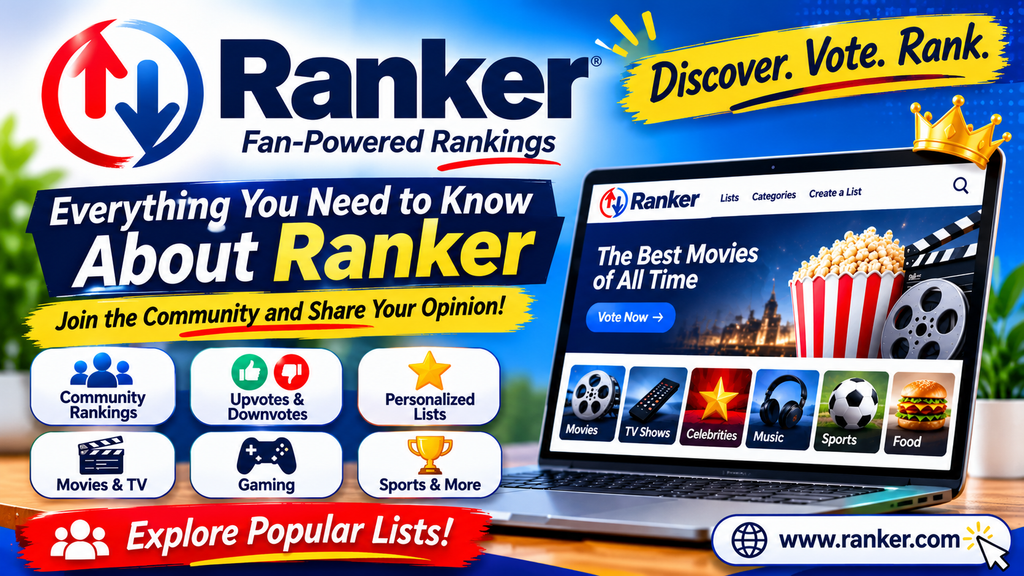
Getting started with Ranker is relatively straightforward. Visitors can explore the website and discover lists without needing advanced technical knowledge.
Here is a simple process for using the platform.
Step 1: Visit the Official Website.
Open a web browser on your computer, tablet, or mobile device
Make sure you are visiting the correct domain before interacting with the website.
Step 2: Explore Available Categories.
After opening Ranker, explore its available content and ranking topics.
You can look for subjects such as:
- Movies and television.
- Music and entertainment.
- Celebrities.
- Sports.
- Food.
- Video games.
- Popular culture.
Choose a category that matches your interests.
Step 3: Open a Ranking List.
Select a list that you find interesting.
Read its title and review the items included in the ranking.
Some lists may contain a short explanation, while others focus primarily on presenting ranked options.
Take time to understand the subject before voting.
Step 4: Vote on Your Favorite Items.
When voting is available, use the voting controls to express your preferences.
You can upvote items you support and downvote options you do not favor.
Your participation contributes to the community voting data.
Step 5: Create a Personalized Ranking.
If the selected list supports re-ranking, you may be able to organize the items according to your personal preferences.
This feature is useful when your favorite choices differ from the current community ranking.
Follow the interface instructions to arrange the available options.
Step 6: Create an Account if Needed.
An account may be useful if you want to save favorites, ratings, and lists.
Registration can also provide access to features that require a logged-in user.
Review the available account options and provide only the information required by the website.
Step 7: Explore More Topics.
After participating in one ranking, explore other subjects.
Ranker offers a broad selection of topics, so visitors can move between entertainment, lifestyle, sports, and other categories.
This helps users discover new interests and participate in different community discussions.
How Does Ranker’s Voting Algorithm Work?
The Ranker voting algorithm is an important part of the platform because it determines how community opinions influence ranking positions.
A simple voting website might place an item at the top solely because it receives the most positive votes. Ranker explains that its system considers several additional factors.
Total Upvotes.
The number of positive votes is one factor used to evaluate an item’s position.
An item that receives strong community support may perform well within a ranking.
However, the total number of upvotes is not the only factor that determines its final position.
Upvote-to-Downvote Ratio.
The relationship between positive and negative votes also matters.
An item receiving many upvotes compared with its downvotes may have a stronger voting ratio than an item with a less favorable balance.
This helps the platform consider the overall direction of community opinion.
Frequency in User Rankings.
The algorithm also considers how frequently an item appears in users’ personalized rankings.
An option that regularly appears in personal lists may demonstrate broader support among participating users.
Position Within Personalized Rankings.
The placement of an item within individual rankings is another important factor.
An item repeatedly placed near the top of personal rankings can contribute differently from one that regularly appears near the bottom.
Why the Algorithm Is Not Fully Public.
Ranker does not publish its complete proprietary mathematical formula.
The platform explains that keeping certain details private helps protect ranking integrity and reduce attempts to manipulate results.
It also uses processes to identify and correct suspected biased voting.
This is important because online voting systems can sometimes attract coordinated campaigns designed to artificially increase the popularity of a particular item.
No community voting system is completely immune to bias. Therefore, users should treat rankings as useful indicators of collective opinion rather than unquestionable facts.
Is Ranker Free to Use?
Ranker provides public access to its website and ranking content. Visitors can explore lists and participate in voting where those features are available.
Some additional interactions are associated with user accounts.
For example, Ranker’s terms of service explain that registered users can save their ratings, favorites, and lists.
Users should review the current website interface and applicable terms to understand which features require registration.
It is also important to distinguish between accessing public content and using Ranker for commercial or business purposes. The platform’s terms explain that its services are intended for lawful, non-commercial use unless otherwise permitted.
For ordinary visitors who want to discover rankings and express opinions, the website provides an accessible starting point.
Benefits of Using Ranker.
Ranker offers several potential benefits for people who enjoy discovering and comparing public opinions.
1. Discover New Recommendations.
One of the biggest advantages is the opportunity to discover movies, shows, music, games, and other subjects through community rankings.
A visitor may find an interesting recommendation that was not previously on their radar.
2. Compare Different Opinions.
Ranker makes it possible to compare personal preferences with the opinions of other participants.
For example, someone may believe a particular movie deserves the first position, while the community ranking suggests another choice.
This difference can encourage further exploration and discussion.
3. Participate in the Ranking Process.
Visitors can contribute to eligible rankings through voting.
This gives users a more active role in the website experience.
4. Explore Multiple Interests.
The variety of available subjects makes Ranker useful for people with different hobbies.
Someone who enjoys films may also explore sports, music, food, and gaming lists.
5. Create Personal Lists.
Eligible re-ranking features allow users to express their individual preferences in an organized way.
This is useful when a person wants to create a personal version of a community ranking.
6. Understand Audience Preferences.
Community rankings can provide a general picture of what participating audiences like or dislike.
They can also reveal differences between fan communities and individual preferences.
7. Easy-to-Understand Format.
The list-based structure makes information relatively easy to scan.
Visitors can quickly review items and compare their positions without reading a lengthy article about every option.
Advantages and Disadvantages of Ranker.
Like other community-driven platforms, Ranker has both strengths and limitations.
Advantages.
Community-driven opinions: Rankings combine contributions from different participants rather than relying entirely on one person’s preferences.
Broad topic selection: Visitors can explore entertainment, sports, gaming, food, and many other subjects.
Interactive experience: Voting allows people to contribute instead of simply reading content.
Personalized ranking: Eligible lists allow users to organize options according to their own preferences.
Content discovery: Rankings can introduce visitors to unfamiliar movies, shows, musicians, and other topics.
Accessible presentation: Organized lists make it easy to compare multiple options.
Disadvantages.
Subjective results: Many rankings depend on personal preferences rather than measurable facts.
Possible voting bias: Coordinated voting and individual preferences can influence results.
Not every list works the same way: Some lists may offer different interaction options or editorial formats.
Proprietary algorithm: The complete mathematical ranking formula is not publicly available.
Limited representation: The people who participate in a ranking may not represent every audience or geographic group.
Changing results: Rankings can change as additional votes and personalized rankings are submitted.
Understanding these limitations helps visitors use the platform more effectively.
Is Ranker a Safe and Legitimate Website?
Ranker is an established online platform operated by Ranker, Inc. It publishes ranking lists and provides interactive features for visitors.
Its official website provides information about its ranking system, terms of service, privacy practices, and publishing policies.
However, using any online platform requires reasonable attention to digital safety.
Here are some practical recommendations:
Visit the Official Domain.
Always check that you are accessing the correct website address.
The official Ranker website is:
Be cautious of websites that use similar names or misleading links.
Review Privacy Information.
Before creating an account, review the privacy policy to understand what information may be collected and how it is used.
Avoid providing unnecessary personal information.
Use Strong Account Security.
If you register, use a strong and unique password.
Do not share your login information with other people.
Understand the Content.
Rankings can include opinions and user-generated material.
Not every statement or recommendation should be treated as verified information.
For important decisions, compare information with reliable independent sources.
Recognize Subjective Rankings.
A list about the greatest movies or best celebrities represents opinions.
Its results are not necessarily official awards, professional ratings, or objective measurements.
Overall, Ranker can be used as an entertainment and discovery platform, provided visitors follow sensible online safety practices.
Ranker vs. Other Ranking Websites.
Several websites publish lists, recommendations, polls, and reviews. However, their approaches are not always the same.
Ranker stands out because of its emphasis on community voting and personalized re-ranking.
Ranker vs. Traditional Editorial Websites.
Traditional editorial websites usually publish lists based on the opinions and research of their writers.
Ranker also uses editorially curated lists, but its community voting system allows visitors to influence eligible rankings.
This creates a difference between reading an editor’s fixed selection and participating in a changing community ranking.
Ranker vs. Review Platforms.
Review platforms often focus on individual ratings, written feedback, and customer experiences.
Ranker generally organizes opinions into lists where users vote on the relative position of different items.
A review can explain why someone likes a product or service, while a ranking helps compare multiple options.
Ranker vs. Social Media Polls.
Social media polls are usually created around individual questions and are often limited to a particular account or audience.
Ranker provides a more structured environment with topic-based lists and ranking features.
Its system also considers personalized re-rankings, which makes the experience different from a simple one-question poll.
Ranker vs. General List Websites.
Many websites publish top-ten lists and recommendation articles.
Ranker’s community-driven approach adds another layer by allowing users to contribute to the ranking process.
This is particularly valuable for topics where there is no universally accepted answer.
Who Should Use Ranker?
Ranker can be useful for different types of internet users.
Movie and Television Fans.
People who enjoy watching films and television programs can use rankings to discover recommendations and compare their favorite shows.
Music Enthusiasts.
Music fans can explore lists about singers, bands, albums, and different musical genres.
Sports Supporters.
Sports fans can participate in discussions about athletes, teams, and memorable sporting achievements.
Gaming Communities.
Gamers can discover lists related to popular games, characters, and gaming franchises.
Entertainment Researchers.
Writers, bloggers, and content creators may use public rankings as a starting point for understanding audience interests.
However, rankings should be independently verified before being used as evidence in research or professional reporting.
Curious Internet Users.
People who simply enjoy exploring interesting topics can browse different lists and discover subjects they may not have considered before.
How Ranker Uses Community Opinions and Data.
Community opinions are valuable because they provide insight into how people think about different subjects.
Ranker brings these opinions together through its voting and ranking system.
For example, consider a list about the best animated movies. Different visitors may have different experiences, cultural backgrounds, and personal preferences.
Some may prefer classic animated films, while others may support modern productions.
When people participate, their individual votes contribute to a larger collection of opinions.
The platform can use this information to organize rankings and understand audience preferences.
The Wisdom of Crowds.
The idea behind the wisdom of crowds is that a large group of people can sometimes produce useful collective judgments.
For example, individual visitors may disagree about which television show is the best. However, a large number of independent votes can reveal which shows receive broader support.
This does not mean that every community decision is automatically correct.
The usefulness of crowd-based rankings depends on factors such as participation, voting quality, topic knowledge, and the presence of bias.
Audience Insights.
Ranker’s broader business activities also involve using audience opinion data to understand entertainment preferences and consumer interests.
These insights can be relevant to publishers, entertainment companies, and other businesses that want to understand what audiences enjoy.
The distinction between a public ranking and a professional research report is important. A ranking reflects participation and preferences, while business insights may involve additional analysis and data products.
Can Ranker Rankings Be Trusted?
Ranker rankings can be useful for understanding community preferences, but they should not be treated as universally correct.
The reliability of a list depends on its subject and the quality of participation.
For subjective questions, such as the best comedy movie or most entertaining television series, different opinions are expected.
There is no single objective answer that everyone must accept.
For factual subjects, however, a voting result should not replace verified information.
For example, if a list ranks the greatest athletes, its order may reflect popularity and fan preferences rather than official performance statistics.
Users should also remember that voting behavior can be influenced by fandom, personal experiences, and coordinated activity.
Ranker explains that it uses systems and moderation processes to address suspected voting manipulation. Nevertheless, the company acknowledges that no large-scale crowd-voting platform can eliminate every possible form of bias.
The best approach is to use Ranker as a resource for discovering public opinion while checking important factual claims through independent sources.
Tips for Getting the Best Experience on Ranker.
Visitors can make their experience more useful by following a few simple practices.
Explore Different Categories.
Do not limit yourself to one topic. Explore movies, music, sports, food, gaming, and other categories.
Read List Descriptions.
Understanding the purpose of a list helps you make more meaningful voting decisions.
Vote According to Your Preferences.
Use voting features to express your genuine opinions instead of following a ranking simply because an item is already popular.
Use Personalized Rankings.
When re-ranking is available, organize items according to your own preferences.
Compare Different Lists.
A topic may appear in multiple rankings with different approaches.
Comparing them can help you understand the subject from different perspectives.
Avoid Treating Rankings as Facts.
A community ranking represents opinions. For technical, scientific, financial, or other important information, consult appropriate authoritative sources.
Protect Your Account.
Use secure login details and review the platform’s privacy and account policies.
The Role of Ranker in Online Entertainment Discovery.
Online entertainment choices have become increasingly broad.
People can choose from films, television programs, streaming services, music platforms, games, and countless other forms of digital entertainment.
With so many options available, discovering something interesting can be challenging.
Community rankings provide one way to narrow down those choices.
Ranker helps visitors explore what other people enjoy and compare different entertainment options in an organized format.
For example, someone looking for a new television series can explore community lists and discover shows that receive strong support from participating viewers.
A music fan can explore lists about different artists and genres.
A gamer can investigate rankings related to popular games and characters.
The value of these rankings is not that they provide a perfect answer. Instead, they offer an additional source of ideas and audience opinions.
They can make entertainment discovery more interactive and encourage people to explore subjects beyond their usual interests.
Ranker for Content Creators and Researchers.
Ranker can also provide useful starting points for people who create online content or research audience interests.
Bloggers, journalists, and entertainment writers often need to understand which subjects attract public attention.
Community rankings can help them identify topics that people enjoy discussing.
For example, a writer researching popular television shows might explore relevant lists to discover frequently discussed programs.
A content creator interested in gaming might examine lists covering different franchises and characters.
However, responsible research requires more than copying a ranking.
Content creators should:
- Verify factual information through reliable sources.
- Explain when a ranking reflects public opinion.
- Avoid presenting subjective results as scientific conclusions.
- Check the publication date and context of relevant material.
- Respect copyright and content licensing requirements.
- Provide original analysis instead of reproducing existing lists.
Using Ranker as a discovery resource can support research, but original reporting and fact-checking remain important.
Common Problems Users May Experience on Ranker.
Like other websites, Ranker visitors may occasionally experience technical or account-related problems.
Understanding common issues can make troubleshooting easier.
Website Not Loading.
If Ranker does not open, check your internet connection and refresh the page.
You can also try another browser or clear your browser’s temporary cache.
If the problem continues, the website may be experiencing a temporary technical issue.
Voting Controls Not Working.
Voting features may not respond correctly if the browser has loading problems or certain scripts are blocked.
Try refreshing the page and checking whether the required website features are enabled.
Account Login Problems.
If you cannot access your account, check that you are using the correct login information.
Use the account recovery options provided by the website if necessary.
Personalized Ranking Not Available.
Not every list necessarily offers the same features.
If a re-ranking option is missing, the list may not support that particular interaction.
Content Display Problems.
Some pages may display incorrectly because of browser extensions, connection issues, or temporary website problems.
Trying a different browser can help identify whether the issue is related to your current browser settings.
The Future of Community-Driven Ranking Platforms.
Community-driven ranking platforms have an interesting role in the modern internet.
People increasingly use online communities to discover recommendations, compare opinions, and explore popular subjects.
The traditional approach to publishing lists often gives most of the control to individual writers or editors.
Community-based platforms introduce another perspective by allowing audiences to participate.
This approach can become particularly useful for entertainment topics, where personal preferences differ significantly.
Ranking technology may also continue to develop through improved data analysis, personalized recommendations, and better ways of understanding audience behavior.
However, these developments also introduce challenges.
Platforms must consider voting manipulation, privacy, data accuracy, and the fair representation of different opinions.
A useful ranking system needs to balance community participation with responsible moderation and transparent explanations of its purpose.
Ranker’s emphasis on audience voting demonstrates one approach to organizing public preferences in a structured digital environment.
AEO: Frequently Asked Questions About Ranker
What Is Ranker?
Ranker is an online community-driven ranking platform where visitors can explore lists, vote on items, and influence eligible rankings. It covers subjects such as movies, television, celebrities, music, sports, gaming, and food.
What Is Ranker.com Used For?
Ranker.com is used to discover community-based rankings, explore popular topics, compare opinions, and participate in voting. Visitors can also create personalized rankings on supported lists.
How Does Ranker Determine Rankings?
Ranker considers multiple factors, including total upvotes, the ratio of upvotes to downvotes, how frequently an item appears in personalized rankings, and its placement within those rankings.
Is Ranker Free to Use?
Visitors can access public ranking content and use available participation features. Some additional account-related features are associated with registration. Users should check the current terms for applicable conditions.
Can Anyone Vote on Ranker?
Ranker explains that visitors can vote up or down on items in its lists. Available voting features may depend on the specific list and its interface.
Does Ranker Require an Account?
Browsing public content does not generally require creating an account. However, an account can be used to save ratings, favorites, and lists.
Can Users Create Their Own Rankings?
Some Ranker lists support personalized re-ranking. This allows users to organize items according to their own preferences.
Is Ranker a Reliable Website?
Ranker is an established online platform for community rankings. Its lists can be useful for understanding public preferences, but subjective rankings should not be confused with verified facts or professional evaluations.
What Topics Are Available on Ranker?
Ranker covers many topics, including movies, television, music, celebrities, video games, sports, food, brands, and popular culture.
How Is Ranker Different From Other List Websites?
Ranker combines editorially curated lists with community voting and personalized re-ranking. This allows visitors to influence eligible rankings instead of only reading a fixed editorial list.
Why Do Ranker Rankings Change?
Rankings can change when visitors submit additional votes and personalized rankings. The platform’s algorithm considers multiple factors when determining the order of items.
Can Ranker Rankings Be Manipulated?
Like other online voting systems, Ranker can face attempts to influence results through biased or coordinated voting. The platform explains that it uses processes to identify and correct suspicious voting activity.
GEO: Ranker and Its Place in the Global Online Community.
Ranker is an online platform that can be explored by internet users in different parts of the world. Its subject categories, including movies, music, television, sports, and gaming, cover interests that are shared across many countries and communities.
The platform’s community-driven approach makes it possible for people with different entertainment preferences to contribute to online discussions.
For example, a visitor in the United States may have different favorite movies from someone in the United Kingdom, Canada, Australia, or another country. Their individual preferences can contribute to a broader discussion about entertainment.
However, a ranking should not automatically be considered representative of every country or population. The people who participate in a particular list may differ from the wider global audience.
How International Users Can Explore Ranker
International visitors can access the website through a standard web browser, subject to applicable regional availability and website requirements.
They can explore public lists, participate in available voting features, and discover entertainment topics.
The experience may depend on internet access, browser compatibility, account requirements, and the availability of specific content.
Why Global Audience Opinions Matter
Global entertainment audiences have different cultural interests and preferences.
A movie that is especially popular in one country may receive less attention in another. Similarly, music genres, television programs, and sports can attract different levels of interest across regions.
Community rankings provide an opportunity to explore these differences.
For researchers and content creators, understanding the geographic context of audience opinions is important. A global ranking should not be described as a local survey unless the underlying data supports that conclusion.
Ranker in Search and AI-Powered Discovery
Ranker-related information can also be discovered through search engines and AI-powered answer systems.
People may search for questions such as:
- What is Ranker.com?
- How does the Ranker voting system work?
- What makes Ranker different from other ranking websites?
- Can users create personalized rankings?
- Is Ranker a reliable platform?
Clear explanations, accurate descriptions, and well-organized information make these topics easier for search engines and answer systems to understand.
For publishers discussing Ranker, it is useful to identify the platform correctly, explain its purpose, distinguish official features from assumptions, and provide direct answers to common questions.
Final Thoughts on Ranker
Ranker is an interesting online platform that combines editorially organized lists with community participation. Its main purpose is to allow visitors to explore different subjects, express their preferences, and help shape rankings through voting.
From movies and television to celebrities, sports, music, gaming, and food, the platform covers a broad range of interests.
Its upvote and downvote system, personalized ranking options, and proprietary ranking algorithm help distinguish it from traditional list-based websites.
However, users should remember that community rankings are not always objective. Personal preferences, voting patterns, and audience participation can influence results.
The best way to use Ranker is as a resource for discovering ideas, comparing opinions, and exploring popular topics rather than treating every ranking as an established fact.
Whether you are an entertainment enthusiast, a curious internet user, or someone interested in audience preferences, Ranker offers an interactive way to explore what people think about different subjects.