

Introduction
Crackstube is a keyword that attracts attention from people looking for information about a website, its purpose, its features, and its online reputation. However, understanding Crackstube requires more than simply looking at its name. Different websites and online articles use this term in different contexts, which can make it difficult for visitors to determine what a particular website actually offers.
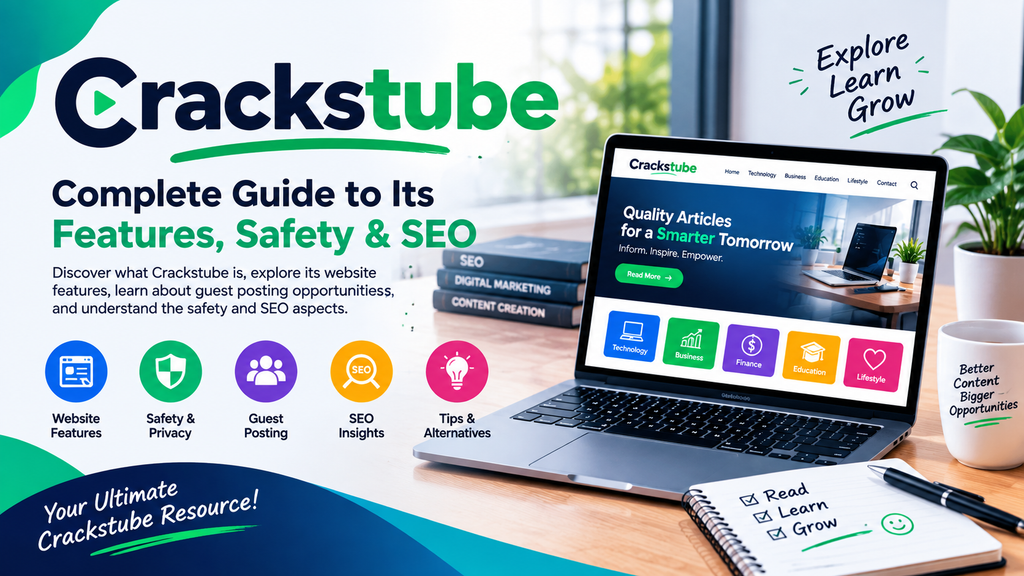
Crackstube.com is described in publicly available online information as a digital publishing platform that publishes informational articles across multiple categories. These subjects may include technology, business, finance, education, lifestyle, and other areas. The website is also associated with guest-posting opportunities. At the same time, unrelated online pages use similar terminology when discussing streaming, software downloads, and other digital services. These descriptions should not automatically be treated as references to the same organization.
For readers, writers, website owners, and digital marketers, the most important step is identifying the exact domain before making assumptions about its services. A website’s name alone does not establish its ownership, credibility, security, or business model.
This guide explores Crackstube, its possible meanings, its publicly described publishing model, its features, website safety, online privacy, guest posting, SEO considerations, and alternatives. It also explains how readers can evaluate information about Crackstube using practical verification methods.
Whether you encountered the keyword through a search engine, an online article, or a publishing opportunity, this article will help you understand the topic and make informed decisions.
What Is Crackstube?
Crackstube is an online search term associated with different website descriptions. One identifiable interpretation concerns Crackstube.com, which presents itself as a digital media and publishing website. Other online references use similar wording in connection with unrelated websites or services.
When discussing Crackstube, it is essential to distinguish between the website’s publicly stated purpose and claims made by third-party publishers.
Crackstube.com is described as a multi-topic publishing platform where visitors can explore written articles about different subjects. Rather than concentrating exclusively on one industry, a multi-topic publication can cover technology, business, finance, education, digital marketing, lifestyle, and other informational categories.
The platform is also associated with guest publishing, a model in which external contributors submit articles for potential publication. Depending on a website’s policies, this arrangement may involve editorial review, publication fees, contributor requirements, or other conditions.
However, the precise services, current submission rules, ownership details, and editorial standards should be verified directly on the website before relying on them.
What Does the Name Crackstube Mean?
The term Crackstube can create confusion because its wording resembles terms associated with modified software and video-sharing websites.
The word “crack” is commonly associated with software modifications that bypass licensing restrictions, while “tube” often appears in the names of video platforms. As a result, some users may assume that every website using the term provides video streaming or unauthorized downloads.
That assumption is not reliable.
A website’s actual purpose depends on its content, ownership, services, and activities rather than the meaning someone assigns to its name. Crackstube.com is publicly described as a publishing platform, but other domains using similar wording must be assessed separately.
Readers should avoid assuming that all websites associated with the keyword have the same operators, policies, or reputation.
Is Crackstube a Website or an Online Platform?
Crackstube is primarily encountered as a website-related keyword. When the discussion concerns Crackstube.com, publicly available descriptions identify it as a digital publishing website.
The term “platform” can refer to a website that organizes content, supports contributors, or provides services beyond displaying ordinary articles. However, the use of this term does not automatically establish that a website has a dedicated mobile application, a large user community, or advanced interactive features.
To understand a specific Crackstube website, examine its homepage, About page, article archive, contact information, terms of service, and available contributor options.
These details provide a more dependable understanding than a short search-result description.
How Does Crackstube Work?
The way Crackstube works depends on which website a person is researching. For Crackstube.com, the publicly described model centers on digital publishing and informational articles.
A typical publishing website organizes its content into categories, displays articles through a website interface, and allows readers to navigate between different topics. Some publishing websites also accept submissions from external writers or businesses.
Although this general model helps explain how a digital publication operates, individual features must be confirmed on the specific website rather than assumed.
Browsing Published Articles
Readers generally begin by visiting a website’s homepage or opening an article directly from a search engine.
A publishing website may organize articles into categories such as technology, business, finance, education, lifestyle, and marketing. These categories help users locate information without navigating through unrelated material.
Once readers open an article, they can evaluate its title, publication date, structure, references, and relevance to their question.
A well-organized article should explain its subject clearly, use descriptive headings, and provide useful information rather than relying on repeated keywords.
When researching Crackstube, readers should check whether an article answers their actual question and whether important claims can be verified independently.
Understanding the Publishing Model
Digital publishing websites can use several business models. Some earn revenue through advertising, subscriptions, sponsorships, or affiliate partnerships. Others offer editorial services or accept paid article submissions.
Crackstube.com is associated in public descriptions with guest posting, but readers should confirm the current terms and charges directly before entering a publishing agreement.
A publishing model should be evaluated according to its transparency. Clear information about editorial standards, submission procedures, payment terms, and contact methods makes it easier for potential contributors to understand what they are purchasing.
No particular revenue model should be assumed without evidence.
Navigating Website Sections
A website’s navigation system helps visitors understand its structure and locate useful pages.
Common sections on a publishing website include the homepage, category archives, article pages, About Us, Contact Us, Privacy Policy, Terms of Service, and contributor guidelines.
Not every website provides all these sections, and their presence does not guarantee that a website is trustworthy. Nevertheless, these pages can provide useful information about the operator’s stated purpose and policies.
If a website offers guest posting, visitors should also look for submission requirements, editorial rules, publication conditions, and information about payment or refunds.
Crackstube Website Features and Content
The publicly described publishing model associated with Crackstube.com suggests a focus on written information across multiple subject areas.
However, it is important to distinguish between general features of digital publishing websites and specific features confirmed on an individual domain.
Multi-Category Informational Content
A multi-category website can serve readers with different interests by publishing articles on several subjects.
Technology content may explain software, websites, digital tools, and online services. Business articles may discuss entrepreneurship, marketing, workplace practices, and company operations. Finance content may cover general financial concepts, while educational articles may help readers understand unfamiliar subjects.
Lifestyle and practical guides can address everyday questions, travel planning, home improvement, and similar interests.
The benefit of this structure is that visitors can explore several topics through one publication. However, broad subject coverage does not necessarily mean that every article offers expert-level information.
Readers should assess each article according to its accuracy, supporting evidence, author expertise, and relevance.

Article Organization and Readability
Readable formatting is an important part of a useful website experience.
Clear headings, short paragraphs, descriptive subheadings, and logical organization help readers find information quickly. A strong article should begin by addressing the main question and then provide additional explanation for people who want more detail.
For example, an article about Crackstube should define the term before discussing its website features, publishing model, privacy considerations, and potential risks.
This approach also helps search engines and answer-oriented systems interpret the relationship between different sections.
Search-Friendly Content
Many digital publications structure their articles around questions that people commonly search for online.
These questions may include “What is Crackstube?”, “How does Crackstube work?”, and “Is Crackstube safe to use?”
Answering these questions directly can improve the usefulness of a page. However, search-friendly formatting alone does not guarantee rankings, traffic, or visibility in AI-generated answers.
Content quality, relevance, originality, technical accessibility, competition, and trust signals can all influence search performance.
Website Accessibility and Mobile Browsing
Website accessibility includes making content understandable and usable for people with different abilities, devices, and browsing conditions.
Useful practices include readable font sizes, sufficient color contrast, descriptive links, meaningful headings, and alternative text for informative images.
A responsive website should also adapt its layout to different screen sizes. Visitors using smartphones should be able to read articles without excessive horizontal scrolling or obstructive pop-ups.
These are general website quality considerations. The actual accessibility and mobile performance of a specific Crackstube domain should be tested rather than assumed.
Why Is Crackstube Getting Attention Online?
Several factors can make a website-related keyword noticeable in search results.
One possibility is curiosity about the website’s identity. Users may encounter the term through a search result, social media post, backlink report, guest-post offer, or third-party article and want to understand what it means.
Another factor is the ambiguity of the name. Different interpretations can lead users to search for the same keyword even when they are looking for different things.
Conflicting Search Results
Search engines organize pages according to their relevance to a query and numerous other ranking signals. When multiple websites discuss the same name, their descriptions may differ considerably.
For Crackstube, some online descriptions focus on publishing and guest posting, while other pages discuss unrelated media or download-related interpretations.
These results should not be combined into one account without evidence connecting the websites.
The correct approach is to examine the domain associated with each result and identify the claims that are supported by that particular website.
The Importance of Brand Clarity
Brand clarity helps visitors understand what a website offers and who operates it.
A recognizable website should ideally provide a consistent identity, clear contact information, an understandable description of its purpose, and accessible policies.
When different websites use similar names, users need to be especially careful. A different domain extension, additional word, or altered spelling can direct visitors to an entirely separate website.
Before creating an account, submitting an article, downloading a file, or paying for a service, verify the complete web address.
Is Crackstube Safe to Use?
The safety of Crackstube cannot be determined from its name alone. It depends on the exact website, its technical configuration, its content, and the actions visitors take.
A website that publishes ordinary articles presents different risks from a website that asks users to install unknown software, download unfamiliar files, or provide sensitive financial information.
Even a site that appears professionally designed may have security or privacy weaknesses. Similarly, a website that uses HTTPS is not automatically trustworthy.
Check the Exact Website Address
The first step is confirming the domain.
Look carefully for spelling differences, extra words, unusual subdomains, and unfamiliar domain endings. Do not assume that two websites are connected simply because they use similar branding.
If a link arrives through an unsolicited email, advertisement, social media message, or guest-post offer, consider opening a new browser tab and locating the intended website independently.
This reduces the chance of accidentally following a misleading link.
Review the Website’s Policies
A website’s privacy policy should explain what personal information may be collected, why it is collected, how it is used, and whether it is shared with other parties.
Terms of service can explain user responsibilities, prohibited activities, payment conditions, and the operator’s stated limitations.
If the website offers publishing services, read its submission terms and refund conditions carefully.
Missing or vague policies do not automatically prove fraud, but they make it harder to assess how the website operates.
Watch for Suspicious Behavior
Warning signs can include repeated redirects, aggressive pop-ups, fake download buttons, unexpected browser notifications, misleading security alerts, and requests to install unfamiliar extensions.
Other warning signs include pressure to make immediate payments, requests for unnecessary personal details, and offers that appear too good to be true.
Do not enter passwords or payment information when you cannot verify the website’s identity and purpose.
If a page unexpectedly redirects to an unrelated service, close it rather than continuing to follow unfamiliar instructions.
Use Security Tools Responsibly
Keeping your browser and operating system updated can help reduce exposure to known security vulnerabilities.
A reputable security application may also detect some malicious downloads or dangerous websites. However, no security tool catches every threat, and a clean scan is not a guarantee that a website is safe.
If you need to inspect a suspicious URL, use a reputable website-reputation service. Avoid uploading private documents or confidential files to public scanning services because the submitted material may be shared or retained according to that service’s policies.
The safest approach is to avoid unnecessary downloads and provide personal information only when there is a clear, legitimate reason.
Crackstube and Online Privacy
Online privacy concerns the collection, use, storage, and sharing of personal information.
When visiting a website, users may disclose information through account registration, contact forms, cookies, analytics systems, advertising technologies, and payment services.
The exact information collected depends on the website and the services it uses. Therefore, privacy practices associated with one Crackstube domain should not be attributed to other similarly named websites.
What Information Might a Website Collect?
Depending on its configuration, a website may process technical information such as browser type, device characteristics, approximate location derived from an IP address, and pages visited.
A website may also collect information that users voluntarily submit, including names, email addresses, account credentials, or business details.
Payment information may be processed by the website itself or by a third-party payment provider.
These are common possibilities, not verified claims about every Crackstube website.
How to Protect Your Personal Information
Use unique passwords for different accounts and enable multifactor authentication when available.
Avoid providing unnecessary personal details through forms. If a website asks for information that seems unrelated to its service, consider why it needs that information before proceeding.
Review browser permissions and decline unnecessary requests for notifications, camera access, microphone access, or location access.
Be cautious about sharing business documents, identity documents, financial information, and confidential client details with unfamiliar websites.
Cookies and Tracking
Cookies are small pieces of data that websites can use to maintain sessions, remember preferences, and support analytics or advertising.
Some cookies are necessary for basic website functionality, while others may be used for measurement or marketing.
A transparent privacy notice should explain the relevant tracking practices and available choices where required by applicable law.
Users can also review their browser’s privacy settings and clear stored site data when appropriate.
Crackstube Guest Posting and Digital Publishing
Guest posting is a publishing practice in which an external writer or organization contributes an article to another website.
It can be used to share expertise, reach a relevant audience, build professional relationships, and introduce readers to useful resources. Guest posting is also common in digital marketing, although its SEO value depends heavily on the quality and purpose of the publication.
Crackstube.com is described in public sources as offering guest-posting opportunities. Anyone considering this service should verify its current availability, requirements, and terms directly with the website.
What Is Guest Posting?
Guest posting involves creating content for a publication that is not owned by the author.
For example, a technology company might contribute an original article explaining an important cybersecurity concept to a relevant business publication. The article may introduce the company’s expertise while providing practical value to readers.
A legitimate editorial process should prioritize relevance, accuracy, originality, and usefulness.
The article should fit the publication’s audience rather than existing solely to insert a promotional link.
How to Evaluate a Guest-Posting Opportunity
Before submitting content to Crackstube or any other publishing website, consider several factors.
Audience relevance: Determine whether the website reaches people who would genuinely benefit from your article.
Content quality: Review existing articles for depth, originality, clarity, and factual accuracy.
Editorial standards: Check whether submissions are reviewed, edited, or rejected when they fail to meet publication requirements.
Transparency: Look for clear information about ownership, contact details, publishing conditions, and fees.
Link policies: Understand whether links are permitted, how they are presented, and whether paid placements are appropriately disclosed.
Cost and terms: If a fee is involved, request written confirmation of the price, deliverables, publication conditions, and refund policy.
These checks help you assess the opportunity before committing money or investing time in content production.
Does Guest Posting Improve SEO?
Guest posting can support SEO when it provides useful content to a relevant audience and earns appropriate editorial exposure.
However, publishing an article on an external website does not automatically improve rankings. Search engines evaluate many factors, and the impact of a backlink depends on context, quality, relevance, and applicable search policies.
Paid placements intended to manipulate ranking signals can create risks if they do not follow search engine link-spam policies.
Where links are paid or sponsored, appropriate link attributes and disclosure practices should be considered. A link should not be treated as a guaranteed ranking benefit simply because it appears on a third-party website.
For a sustainable SEO strategy, focus on relevant publications, original research, useful expertise, and a balanced link profile rather than the number of guest posts alone.
Questions to Ask Before Paying for Publication
If a Crackstube-related website offers paid publishing, ask the following questions before making a decision:
- What is included in the quoted price?
- Is the article reviewed before publication?
- Are there restrictions on topic, word count, or external links?
- How are sponsored articles identified?
- Are backlinks subject to specific attributes?
- Can the article be edited or removed later?
- Is the publication date guaranteed?
- What happens if the article is rejected?
- Is there a written refund or cancellation policy?
Clear answers help establish expectations. If a provider refuses to explain important terms, avoid making assumptions about what you will receive.
Crackstube and Search Engine Optimization
Search engine optimization involves improving a website so that its pages are easier to discover, understand, and use.
For a keyword such as Crackstube, an effective article should answer the primary question while also addressing closely related concerns, including website identity, features, safety, privacy, and publishing.
The objective is not to repeat the keyword as often as possible. It is to provide a comprehensive and accurate resource that satisfies the reader’s intent.
Using the Focus Keyword Naturally
The focus keyword for this article is Crackstube.
It can appear in the title, opening paragraph, a relevant subheading, selected body sections, and the conclusion.
Related terms such as Crackstube website, Crackstube.com, Crackstube review, Crackstube meaning, and Crackstube guest posting can be included where they fit the discussion.
These phrases should not be inserted into every paragraph. Repetition can make writing awkward and reduce readability.
There is no universal keyword-density percentage that guarantees a higher Google ranking. Natural language and topic relevance are more useful goals than an arbitrary repetition target.
Semantic and LSI Keywords
Semantic keywords are terms that help explain the broader topic surrounding a primary search phrase.
For Crackstube, relevant terms may include digital publishing platform, website review, online content platform, website legitimacy, privacy protection, guest-post submission, editorial guidelines, and online browsing safety.
The term LSI is often used in SEO discussions to describe related keywords. However, modern content planning should not rely on the idea that a specific LSI keyword list is a direct Google ranking factor.
Instead, use related vocabulary to answer meaningful questions and cover the subject thoroughly.
NLP Keywords and Search Intent
Natural Language Processing, or NLP, refers to methods computers use to process and interpret human language.
In SEO content planning, NLP-related keyword suggestions often include natural questions and phrases associated with the main topic.
Examples include:
- What is Crackstube?
- How does Crackstube work?
- Is Crackstube safe to use?
- What does Crackstube.com offer?
- How can users evaluate a publishing website?
- What should writers check before submitting guest posts?
These phrases help organize content around the questions readers may actually ask.
They should be treated as editorial suggestions rather than a verified list of ranking factors or measured search volumes.
Internal Linking and Content Structure
Internal links connect relevant pages on the same website.
If you publish related articles about online safety, guest posting, SEO, website reviews, or digital publishing, appropriate internal links can help readers discover those resources.
Use descriptive anchor text that explains the destination. Avoid linking every occurrence of Crackstube or adding irrelevant links merely to increase link counts.
A clear hierarchy of headings also helps readers navigate the article and understand how individual sections relate to the main topic.
Meta Title and Meta Description
A descriptive title can help readers understand what a page covers before opening it.
A suitable title for this article is:
Crackstube: Website Guide, Features, Safety and SEO
A possible meta description is:
Discover what Crackstube is, explore its website features, review safety and privacy considerations, and learn about guest posting and SEO.
The title and description should accurately reflect the content on the page. Search engines may generate different title links or snippets depending on the query and page context, so neither is guaranteed to appear exactly as written.
AEO: How to Optimize Crackstube Content for Direct Answers
Answer Engine Optimization, or AEO, focuses on making information easy for systems and users to identify, understand, and retrieve when answering questions.
For an article about Crackstube, AEO can be supported by providing direct definitions, using descriptive headings, and answering common questions clearly.
Start With a Direct Answer
A useful opening answer might be:
“Crackstube is a website-related search term associated with different online descriptions. Crackstube.com is publicly described as a digital publishing and guest-posting platform, but similarly named websites may have different purposes. Users should verify the exact domain before relying on claims about its services or safety.”
This answer establishes the central distinction immediately and gives readers a clear starting point.
Use Question-Based Headings
Question-based headings can match the way users search for information.
Examples include “What Is Crackstube?”, “Is Crackstube Safe to Use?”, and “Does Crackstube Offer Guest Posting?”
Each heading should be followed by an answer that addresses the question directly before providing further context.
Avoid writing a heading that promises a definitive answer when the available evidence is incomplete.
Make Important Information Easy to Verify
AEO-friendly writing should distinguish verified information from general guidance and unconfirmed claims.
For example, the statement that a website publicly describes itself as a publishing platform is different from independently confirming its ownership, security, or editorial quality.
Using precise language helps readers understand the strength of the evidence and reduces the risk of misleading conclusions.
Provide Useful FAQs
Frequently asked questions can address secondary concerns without forcing readers to search through the entire article.
Answers should be concise enough to understand quickly but detailed enough to avoid oversimplification.
FAQ content should serve real reader needs rather than exist solely to add more keyword variations.
GEO: How to Make Crackstube Content Useful for AI Search
Generative Engine Optimization, or GEO, is a content approach intended to improve the clarity, usefulness, and discoverability of information in generative search experiences.
No specific GEO technique guarantees that an article will be cited by an AI system. However, several editorial practices can make a page easier to interpret and evaluate.
Use Clear Definitions and Specific Statements
AI-powered systems need to distinguish between similar concepts.
An article about Crackstube should clearly explain that Crackstube.com and unrelated domains using similar names should not automatically be treated as the same website.
This distinction is more useful than making broad claims about every service associated with the keyword.
Support Claims With Trustworthy Evidence
When discussing ownership, website features, pricing, domain history, or security, use appropriate evidence.
Official website pages may establish what the operator claims about its own services. Independent reporting, technical checks, and reliable records may provide additional context.
These sources do not all carry the same evidentiary weight. A website’s own promotional statement should not be presented as independent confirmation.
Demonstrate Expertise and Transparency
Useful content explains how a conclusion was reached and acknowledges where information remains uncertain.
For instance, a publishing website may advertise guest-posting services, but that does not independently prove that its audience is valuable, its backlinks improve rankings, or its articles receive substantial traffic.
Explaining these limitations makes the article more informative and helps readers make better decisions.
Keep Content Accurate and Updated
Websites can change their content, contact details, submission requirements, and privacy policies over time.
If you publish a Crackstube guide, review it periodically and update claims when reliable new information becomes available.
A visible update date can help readers understand when a page was reviewed, provided that the date accurately reflects a genuine update.
Use Structured Data Appropriately
Structured data can help search engines interpret specific types of content when the markup follows the relevant guidelines.
For example, an article page may use suitable Article or BlogPosting structured data when its content meets the requirements.
Structured data does not guarantee enhanced search results or AI citations. It should accurately describe the visible page rather than introduce claims that readers cannot verify.
Crackstube Alternatives and Safer Options
The best alternative depends on what a user actually wants to accomplish.
Someone researching Crackstube as a publishing website may need reputable publications, editorial submission opportunities, or guest-posting platforms. Someone seeking videos or software needs a different type of service.
Because the keyword has multiple interpretations, there is no single alternative that fits every user.
Alternatives for Reading Online Content
For general information, look for established publications that identify their editorial teams, explain their correction policies, and support important claims with credible evidence.
Choose sources that are relevant to the subject rather than relying exclusively on a site’s overall popularity.
For health, financial, and legal topics, prioritize authoritative sources appropriate to the question.
Alternatives for Guest Posting
Writers and businesses can consider industry-specific publications, professional associations, relevant business blogs, and editorial websites that accept external contributions.
The best publication is not necessarily the one with the highest advertised domain metrics or the lowest price.
Evaluate audience relevance, editorial quality, subject expertise, and the likely value to actual readers.
Avoid providers that promise guaranteed search rankings or insist that every paid link will pass ranking value.
Alternatives for Free and Legal Software
If a person’s actual goal is to obtain software without paying, legitimate free and open-source applications may meet the need.
For example, LibreOffice provides office productivity tools, GIMP supports image editing, VLC plays many media formats, and Kdenlive supports video editing.
Check each application’s official website for the current version and download instructions.
Using legitimate software helps reduce exposure to modified installers, hidden malware, and licensing problems.
Alternatives for Video Content
For video streaming, use established services that clearly explain their content offerings, regional availability, and terms of use.
Free, advertising-supported services may provide legal viewing options depending on the user’s country and the titles available there.
Before using an unfamiliar streaming website, check its domain, privacy practices, and any requests to install software or extensions.
The most appropriate alternative is the one that meets your needs without requiring unnecessary security or legal risks.
Common Mistakes to Avoid When Researching Crackstube
Several mistakes can lead to incorrect conclusions about Crackstube.
Assuming Every Website Is Connected
Similar names do not prove common ownership.
Always verify the complete domain and avoid transferring claims from one website to another without evidence of a connection.
Trusting Promotional Claims Without Checking Them
A website may describe itself as reliable, authoritative, or suitable for SEO. These descriptions are claims rather than independent proof.
Look for supporting evidence before making a decision.
Assuming HTTPS Means a Website Is Safe
HTTPS encrypts information transmitted between a browser and a website, but it does not establish that the operator is legitimate or that all content is harmless.
Consider the website’s behavior, policies, reputation, and requested actions.
Paying for Guest Posts Without Reviewing the Terms
Before purchasing publication, confirm the deliverables, link policies, editorial requirements, payment conditions, and refund arrangements.
A low price or attractive backlink offer should not replace due diligence.
Overusing the Keyword in SEO Articles
Repeating Crackstube unnaturally does not guarantee better rankings.
Use the focus keyword where it contributes to the meaning and include related phrases only when relevant.
Treating Every Search Result as Verified Information
Search results can contain outdated descriptions, promotional material, unsupported statements, and articles that repeat one another.
Check important claims against the most relevant available evidence and explain uncertainty when it cannot be resolved.
Frequently Asked Questions About Crackstube
1. What Is Crackstube?
Crackstube is a search term associated with different website descriptions. Crackstube.com is publicly described as a digital publishing and guest-posting website, while other online references use similar wording in unrelated contexts. The exact domain matters when determining what a particular website offers.
2. What Is Crackstube.com Used For?
Public descriptions present Crackstube.com as a multi-topic publishing platform that shares informational articles and is associated with guest-posting opportunities. Its current services, editorial requirements, and publishing terms should be checked directly on the website.
3. Is Crackstube Safe to Use?
Safety cannot be established from the name alone. Verify the exact domain, review its policies, watch for suspicious redirects and downloads, and avoid sharing sensitive information unless the website’s identity and purpose are clear.
4. Is Crackstube a Streaming Website?
Available online descriptions are inconsistent about the broader keyword. Crackstube.com is described as a publishing platform, but similarly named websites may have different purposes. Do not assume that a particular domain offers streaming without checking its actual content.
5. Does Crackstube Offer Guest Posting?
Crackstube.com is associated with guest-posting opportunities in public descriptions. However, anyone interested in submitting an article should verify the current submission process, available categories, fees, link rules, and editorial requirements directly.
6. Can Crackstube Help With SEO?
A publishing opportunity may support content distribution and audience reach when the publication is relevant and the article provides genuine value. However, a guest post or backlink does not guarantee better rankings. Assess the website’s audience, content quality, and link practices before investing in a placement.
7. What Are LSI Keywords for Crackstube?
Related keyword suggestions include Crackstube website, Crackstube.com, Crackstube review, Crackstube meaning, Crackstube features, Crackstube guest posting, and website safety. These phrases can help cover related questions naturally, but they are suggestions rather than verified search-volume measurements.
8. What Are NLP Keywords for Crackstube?
Useful question-based and semantic phrases include “What is Crackstube?”, “How does Crackstube work?”, “Is Crackstube safe to use?”, “What does Crackstube.com offer?”, and “How can users evaluate a publishing website?” These phrases can guide article structure and help address user intent.
9. How Can I Check Whether a Crackstube Website Is Legitimate?
Check the complete URL, About and Contact pages, privacy policy, terms of service, and the consistency of its claims. Look for independent information where available, and be cautious if the site demands unnecessary personal data, pushes unknown downloads, or pressures you to make an immediate payment.
10. Are Crackstube and CracksTube the Same Website?
The spellings may be used interchangeably in some descriptions, but the spelling of a brand alone does not prove that two web addresses are connected. Confirm the exact domain and any evidence of shared ownership before treating the websites as the same service.
11. Does Crackstube Have an Official Mobile App?
A mobile app should not be assumed to exist without reliable confirmation. Check the website’s official information and trusted app stores. Avoid installing an application from an unfamiliar download page merely because it uses a similar name.
12. Can I Trust Articles Published on Crackstube?
Evaluate each article individually. Check the author’s expertise, publication date, supporting evidence, and consistency with reliable sources. A website’s general publishing model does not guarantee that every article is accurate or suitable for important decisions.
13. What Should I Check Before Buying a Guest Post?
Review the publication’s audience, content quality, editorial process, price, link attributes, sponsored-content disclosure, publication terms, and refund policy. Do not assume that an expensive placement is effective or that a cheap placement is good value.
14. Why Do Different Websites Describe Crackstube Differently?
The keyword is used in different online contexts, and search results may include articles about separate websites. Some descriptions focus on publishing, while others discuss unrelated services. Differences in wording do not establish a connection between the websites.
15. What Is the Best Way to Research Crackstube?
Start with the exact domain you want to understand. Review its own pages, compare important claims with independent sources, and avoid relying on search-result titles alone. If you are considering a purchase or submission, confirm the terms before committing.
Final Thoughts on Crackstube
Crackstube is a keyword that requires careful interpretation because online descriptions do not always refer to the same website or service.
Crackstube.com is publicly described as a digital publishing platform associated with informational articles and guest-posting opportunities. However, this description should not be applied automatically to every domain using similar wording. Website identity, ownership, security, and available services must be evaluated individually.
For readers, the priority is understanding the exact website and checking whether its content is useful and trustworthy. For writers and marketers, the priority is evaluating editorial quality, audience relevance, pricing, and backlink practices before investing in guest publishing.
For SEO professionals, the most effective approach is to create original content that answers real questions, uses related keywords naturally, and distinguishes verified facts from assumptions. AEO and GEO principles can help organize information clearly, but neither guarantees search rankings or AI citations.
Ultimately, the best way to understand Crackstube is to focus on evidence rather than the name alone. Verify the domain, read the available policies, evaluate the content, and make decisions based on the specific website you are researching.
By following these principles, users can navigate confusing search results more confidently, protect their personal information, and make more informed decisions about online publishing and digital services.